

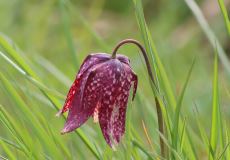


Abney Park Cemetery is a burial ground, arboretum and nature reserve offering a haven for wildlife just yards from the noise and bustle of Stoke Newington High Street. It is one of London’s “Magnificent Seven” Victorian garden cemeteries. The site occupies 13 hectares (32 acres). It is owned by the London Borough of Hackney and managed by the Abney Park Cemetery Trust as a nature reserve and an environmental education service. Address: Abney Park Cemetery, Stoke Newington High Street, London N16 0LN (Map; OS grid reference TQ333867)
History
Abney Park Cemetery opened in 1840 as a model garden cemetery with 2,500 tress and shrubs already planted. The cemetery was initially run as a trust but in 1882 it passed to a strictly commercial general cemetery company, which applied standardised park-like landscaping principles, replacing much of the original arboretum planting. The cemetery decayed rapidly after the Second World War and in the 1970s the commercial cemetery company went into liquidation. The site was purchased in 1979 by the London Borough of Hackney as a non-operational burial ground and open space. In the 1990s, the cemetery was designated as the borough’s first statutory local nature reserve.
Habitat
The cemetery is noted for its mature woodland, rich in wildlife, combined with grassy paths and glades. Many of the trees and shrubs are descended from the first phase of cemetery landscaping and management (1838-82). Some original trees can still be found. Heritage trees include the Service Tree of Fontainebleau (Sorbus latifolia) and the Various-leaved Hawthorn (Crataegus heterophylla). Abney Park is believed to be the first site where these two trees became naturalised in the UK, and both have naturalised extensively, making Abney Park nationally important as the main place in the UK where they can be found. Other heritage trees from original arboretum include Bhutan Pine (Pinus wallichiana), Indian Bean Tree (Catalpa bignonoides), Turner's Oak (Quercus robur x Quercus ilex) and Lucombe Oak (Quercus cerris x Quercus x ilex, syn. Quercus x hispanica 'Lucombeana'), all of which are rare in London’s parks.
The cemetery also includes an area of dry heath community where the soil changes to sandy brick-earth around the Church Street entrance and along Dr Watts' Walk to the Abney Park Chapel. The plants here, which include Silver Birch and Bracken Fern, are probably the sole surviving remnant of Hackney's sandy brick-earth heath flora.
More detailed information about the cemetery’s flora can be found on the biodiversity page of the cemetery website.
Species
Birds (contributed by Mark James Pearson)

Abney is the only substantial woodland in north Hackney, and as such hosts a range of breeding, wintering and passage species. Sparrowhawk and Tawny Owl both breed annually, and there are healthy populations of Great Spotted Woodpeckers (around six pairs), Blackcaps, Stock Doves and all the common garden / woodland species. Green Woodpecker, Rose-ringed Parakeet, Chiffchaff and Coal Tit are also resident / semi-resident in small numbers. In autumn, winter and early spring, the cemetery attracts visiting thrushes and finches; of the latter, Lesser Redpoll, Brambling and Siskin are regular visitors (with Common Redpoll also recorded, in 2009). In passage periods, expected migrants include Willow Warblers, Garden Warblers, Woodcocks and Spotted Flycatchers; rare but near-annual migrants include Pied Flycatcher, Common Redstart, both Whitethroats and even Reed Warbler. Common Buzzards are annual overhead, with several birds showing interest in putting down (with one doing so in 2008); other flyovers include Red Kites and Merlin. Abney attracts more than its fair share of Firecrests; the best times to look for them are April and October, although at least three wintering birds were present 2008/9 and a pair bred as recently as 2000. Unfortunately species such as Lesser Spotted Woodpecker, Nuthatch, Bullfinch and Treecreeper are at best extremely rare vagrants in recent years, with none of the above recorded since 2005. Unexpected breeders include Mallard and Canada Goose.
Mammals, reptiles and amphibians
Abney Park Cemetery is home to Brown Rat, Grey Squirrel, Fox, Wood Mouse, House Mouse, bats and the odd feral dog and cat.
Invertebrates
Butterflies found in the cemetery include inner London’s largest population of Speckled Wood. The site is also an important inner city habitat for Purple Hairstreak and Large Skipper. Other species include Brimstone, Comma, Common Blue, Large White, Small White, Green-veined White, Small Skipper, Essex Skipper, Holly Blue, Orange Tip, Peacock, Painted Lady, Red Admiral, Small Tortoiseshell and White-letter Hairstreak. Moths include Angle Shades, August Thorn, Codling, Dun-bar, Early Thorn, Footman, Garden Carpet, Heart and Dart, Magpie, Oak Beauty, Red Underwing, Snout, Swallowtail, White Ermine and Willow Beauty.
Nationally scarce invertebrates include the fly Leopoldius brevirostris, the hoverfly Pocota personata and the Girdled Mining Bee (Andrena labiata).
Fungi
About three hundred species of fungi have been found including scarce Earthstars and Dyer's Mazegill (Phaeolus schweinitzii) which is scarce in London.
Plants
Approximately four hundred plant species have been recorded in Abney Park. Wildflowers of note include Wood Spurge and Hairy St. John’s Wort (neither believed to grow elsewhere in Hackney), Deadly Nightshade, Enchanter’s Nightshade, Dog’s Mercury, Ivy Broomrape, Wood Forget-me not, Lesser Celandine, Creeping Jenny, and Hoary Ragwort.
Abney Park is home to a variety of animal species and the biodiversity page of the cemetery website gives further information about birds, mammals, butterflies and moths.
Practicalities
Directions
The site is adjacent to the A10 trunk road through Stoke Newington. There is a (paying) car park close to the cemetery’s Stoke Newington High Street entrance.
The cemetery is 200 yards from Stoke Newington railway station, on the line linking Liverpool Street to Cheshunt and Enfield. Trains generally run about every 15 minutes.
The nearest London Underground station is Manor House (Piccadilly line), about 2km away, from which it is probably best to walk (25-30 minues) because there is no direct bus service. Bus routes passing close to the cemetery include 73 (the recommended route from the West End), 67, 76, 106, 149, 243, 276, 349, 393 and 476.
The site can be reached on foot by following the Highgate to Hackney Wick section of the Capital Ring walking route, which passes through the cemetery.
Access
The cemetery is open from 8am to dusk. Consult the visiting information page for further information.
Most of the footpaths are suitable for wheelchairs.
Attributions: Content Andrew Haynes, Top image: Abney Park Trust website.
